%20(9).png)
Incongruent
Podcast edited by Stephen King, award-winning academic, researcher and communications professional.
Chester | Dubai | The World.
Correspondence email: steve@kk-stud.io.
Incongruent
S5E13 AI, Advertising, And The Future Of Trust: Nadeem Ibrahim
Spill the tea - we want to hear from you!
What if AI didn’t arrive overnight but grew up with us—and only now stepped into the spotlight? We’re joined by Nadeem Ibrahim to map the real story: from Spectrum tapes and pagers to telco‑powered data flows and the rise of large language models that collapse research, recommendation, and purchase into a single conversation.
We get honest about the agency dilemma: when a strategist uses AI to draft research or polish slides, is that cheating or smart leverage? Nadim argues for a different metric—returning 30% of brainspace to strategy, creative judgement, and client problem‑solving. The machine assembles; the human interrogates, edits, and decides. That’s how brands earn distinctiveness in a sea of sameness. Along the way, we unpack how user‑generated public data fuels models, why conversational commerce is a direct threat to traditional search, and how marketers can meet customers at the moment of intent inside AI interfaces.
The stakes rise with ownership and trust. Deepfakes, synthetic voices, and viral misinformation make provenance non‑negotiable. We dive into talent IDs and authenticity metadata designed to protect artists, route royalties, and help platforms block abuse. Today it safeguards public figures; tomorrow it should extend to everyone, because a face and a voice are not public domain. We also explore fintech’s convergence with e‑commerce and AI, envisioning systems that can nudge healthier spending while delivering uncanny personalisation—if guardrails like consent and auditability are built in.
If you’re leading a team, start small but deliberate: automate low‑leverage tasks, codify human review, treat prompts and logs as sensitive data, and pilot conversational commerce with clear measurement. If you’re a creator, add authenticity signals and demand the same from partners. Subscribe for more sharp, human‑centred takes on AI, advertising, and digital culture—and tell us: where should AI never cross the line?
Hello and welcome to a brand new episode of Incongruent. And like yeah, today we're talking to this amazing guy who has been on the forefront when it comes to AI, like using AI on different what do you call on different fronts.
Stephen King:I would say that's brilliant. Thank you very much for that wonderful introduction.
Arjun Radeesh:Oh, you're most welcome.
Stephen King:You didn't meet me, did you? Who did we speak to?
Arjun Radeesh:So we ended up speaking to Nadeem Ibrahim. He currently is the MENA product manager at Meta.
Stephen King:And he's also a podcaster. So please do check out the Brew Bytes podcast if you listen to this and enjoy the episode. We talked about , about uh genres of technology from the 80s to today, how that's all emerged, how that's brought us to the current situation where we are. We talked about future trends about the tech. Uh this conversation goes all over the place. Uh but it is extremely, extremely interesting. So if you like the episode, check out Brew Byte, subscribe to them, subscribe to us, like us, give it a comment, and all that you think because it's a wild ride. Here we go.
Arjun Radeesh:So today we are talking to a renowned forward-looking digital authority in the Middle East and North African region. Nadeem Ibrahim has garnered industrial recognition for his outstanding proficiency and strategic foresight, holding the position as regional program manager at Meta, he brings forth more than 18 years of expertise, steering audience-focused strategies and providing invaluable insights to his clients. Nadeem's passion for gaming and AI drives his dedication to ensuring clients maintain a competitive edge, to stay at the forefront of innovation. Additionally, he is spearheading the creation of a podcast series encompassing a wide array of topics relevant to our industry, such as well-being and empowerment, further solidifying his commitment to knowledge, dissemination, and industry leadership. Nadeem, welcome to Incongruent and how has it been going?
Nadeem Ibrahim:Thanks for having me, Arjun, Steven. Yeah. I would like to say, yeah, thank you first of all for having me. Thanks for that introduction. I've never heard it like that before. If I'm being honest with you, it's amazing to hear it from someone else because often we we uh we don't often reflect on maybe some of our greatest achievements or what we're doing um right now in the here and now. So thanks for that.
Nadeem Ibrahim:Um yeah, and also the podcast. And yeah, so I'm I'm I'm looking forward to some some fruitful conversations. Um as you know me and Steven knows me quite well. I like to be as raw as possible and unfiltered as possible, but I will stay within the realms of what is acceptable based on what you would need me to be. But at the same time, I'm not gonna I'm not gonna shy away from the truth either when you start throwing questions at me. And just for the record, just for the record, so uh people listening are aware of this, I have barely seen the questions, and I have come a little bit unprepared, Stephen, as I look into say OMG. But I guess look, there's two things I always say to the team I've always managed and mentored over time, and including within myself, you either know it or you understand it.
Nadeem Ibrahim:So you're gonna get hopefully quick answers of me understanding what you're asking rather than just knowing it, because knowing it is just like half-hearted. So bring it on.
Stephen King:I'm not worried, I'm not worried at all. Uh from my perspective, we sent you the questions three weeks ago. Uh and and if you choose not to look at them, then that's then that's fair game.
Nadeem Ibrahim:But that's when you get the best reaction, right?
Stephen King:Well, let's see. Okay, Arjun, let's rock and roll.
Arjun Radeesh:Alright, like definitely that's something which we want. But um going on with the questions. Would you like to tell us a bit about your career history today, and especially how have you got involved with artificial intelligence?
Nadeem Ibrahim:Yeah, so uh great question in a way. Like, I don't like to talk about myself, but I will talk about myself. Now I've been in the space of technology for about um ever since I was a youth, a kid, right? I've always been in the in the space. Technology's always been something quite passionate for me. I I remember, and Arjun you might not remember this, but I think Steven should remember this with when when pagers were around.
Stephen King:I was here before pages. We used to knock on people's doors. Yeah, so pages pages. There we go. I was like, we don't want to use pages? That's terrible technology. No, no, no.
Nadeem Ibrahim:Okay, let me go a bit further back further back then. I Spectrum, okay? And you might have this on my own podcast, you know, where I talk about when I ask guests about what was their sort of like piece of tech that they sort of grew up with. And my I always talk about the Spectrum because Spectrum was the first fascinating piece of tech that I ever came across, which was a tape cassette that can load an 8-bit game that you can really be engrossed with for hours and hours and hours.
Nadeem Ibrahim:Um so tech's always been like a really soft spot in my heart whilst growing up, and I had the ability to sort of disconnect from technology when I was going through school and university. Um I became more focused on sort of economics, I became more focused on trying to be like an investment banker, but then, truth be told, after graduation, I sort of decided that it's not for me. I didn't want to go down that cycle of you know just being a number in an organization or an industry where I wanted to look for something different. And I guess when you when you like technology, the you're always trying to be ahead of where technology is going.
Nadeem Ibrahim:So you're so interested and intrigued by emerging technologies, right? So at the time of university, that curious factor from technology brought it into my career. Like, what's up and coming back? Can I think of myself, you know, being that I want to grow into? And advertising came around. And I took the job of the first online sales executive for the Scotsman newspaper, which was owned by Johnson Press at the time. Um, and that's how I fell into sort of the space of digital advertising. My career sort of started off from that.
Nadeem Ibrahim:Fast-forward 18 or 19 years now, and I'm here in Dubai. Previous to my current position, I was leading you know an entire market of Saudi Arabia for UM, head of digital strategy. Had had the fantastic opportunity to work across some of the prominent brands in Saudi Arabia, the top five most you know lucrative brands from STC, Aramco, Sabik. Then you have like McDonald's and Espresso, like super, super, super cool you know, brands to ever sort of encounter and be part of at least a little bit of that DNA is still in within me.
Nadeem Ibrahim:Um, and then you know, today I'm at Meta, as you know, um, you know, running some regional programs for them for in the space of telco. And telco, funny enough, has always been a you know the part of my career in advertising.
Nadeem Ibrahim:So from inception of my advertising career, maybe omit five or six years, it you could regard like you know, 14 years of my own experience has been in the space of telco, from Optis in Singapore to O2 in the UK, Vodafone Group and Vodafone UK, and then here STC, and now working across many other telcos where I am today.
Nadeem Ibrahim:So telco in itself has a soft spot for me, which also is an enabler of technology and also is a passion point of me.
Nadeem Ibrahim:To answer your next question, follow up, which was how I fell into AI. I grew up with AI, like you have grown up with AI, and Stephen has grown up with AI, and everyone listening has grown up with AI. We've not necessarily you know fall fallen into AI in that specific way of looking at it. I always like to think it's like with search engine, with the internet, it was an evolution, right? So when the internet came around, it wasn't a case that you had a choice between the internet or knowing it. We fell into the internet, it became a communication channel, became a research channel, and now before you know it, it's an e-commerce channel, it's an AI channel, it's everything that you can think about.
Nadeem Ibrahim:So AI kinda has always been there, but it's become more evident now that AI is a thing, like a venom, effectively. It's out the box, they can't go back in the box now.
Nadeem Ibrahim:And we see many, many factions of AI, but I like to think that we've always been involved in AI, but we've never really understood or seen AI at the forefront.
Nadeem Ibrahim:So look at aviation, has always used an AI or form to navigate flights and you know avoid turbulence or bad weather, it's using some form of AI proxy. Search has always used AI, Netflix has used AI in the you know, through user behavior. So we've had some form of AI, and I think you know, for me personally speaking, AI has never been like a focal point because it's not really a focal point. AI has been built into everything that we've used in our day-to-day. So I've never seen it seen of it as like the elephant in the room. It's been like an adoption that I've just naturally endorsed.
Nadeem Ibrahim:So, unlike for many, many others, perhaps, AI has become a thing, a terrifying thing. Remember last year, or even perhaps the year before, when Steve and I was on stage, we were talking about is AI going to take our jobs, and you know, has taken, unfortunately, you know, is taking a lot of jobs and some specialities, and it had become a thing. But I think if you've grown up or you endorse AI natively, and like for me right now, I'm trying to maybe use my time wisely and get ahead of what AI is and sort of look at LLMs and build an LLM if I can and so forth. But taking the time out is what's needed, right? So I've grown up with AI, I would say, not necessarily fallen into it, and I use it day to day, frankly speaking.
Stephen King:That's good. I'm gonna jump in here, actually, just a second. So we've talked about uh you mentioned the venom of AI, uh, which sounds like it's a nasty thing it's come up, but so there is uh a country point. So we have the boiling frog, right? We've been boiled for many, many years with all the automation and all this narrow AI. Let me let me use some jar. Uh and now we have the general AI which has just been dropped on us. And uh do you think there's that is that the analogy that we're seeing? It's it's more of a case of the the we've been dropped in this pot of ChatGPT available to everybody, and everyone's gone.
Nadeem Ibrahim:I think you gotta look at it in a different way. Like, I wouldn't say that we have been dropped into it, um I would say more the fact that um it's been there for us to use for quite some time. We've just not really known how to use it.
Nadeem Ibrahim:A few uh a few times with some of my guests I've all I've debated the fact that I'm not sure if I debated it with you, but around we are the guinea pigs of AI of this generation. Because AI before was an enterprise function. As I mentioned, like airlines were using it, you know, bank and finance have been using it, cloud computing has been using it intelligently and so forth, okay? But now that it's become a consumer and I guess a human utility that you can practice and you can utilize day to day by choice.
Nadeem Ibrahim:Well, choice for a uh for the time being. You know, a AI is now there at the forefront that gives people the no the ability to think, okay, I can build a PowerPoint slide using AI, or I can build it using just PowerPoint. Okay. Um which which route do you take? For some, they still prefer the old way, and there's some industries that are still using manual way of building slides, there's some that are endorsing it. However, it's it's not necessarily being thrown on us as such.
Nadeem Ibrahim:There's a perception thing here, depending on the industry you look at. If I think of the advertising industry, and I've recently written a piece for a an industry publication, which talks about the fact that AI is there to be utilized in the way you want to utilize it. But the perception is if I utilize AI, I'm either utilizing it to cost cut, or I'm mute if I do utilize it for my own needs, whether like in the ad industry, it's perceived as you're cheating. It's perceived as you're cheating, and I'm sure it's the same for the education sector as well, with people using it for a piece of research, it's cheating. And that perception needs to change because it's not cheating.
Stephen King:If you were actually to Google that, you would see in the UK that X number of uh teachers do actually feel that using AI is cheating, and there's a report that was published, I think it was by uh Bet, B-E-T-T, BET Global, the conferences, uh, and and and that was their perspective. Um, and there is a 20% of one in five teachers are scared of it and have got real fear that it's gonna cause problems. But that's education in the world.
Nadeem Ibrahim:If I say a word, can you bleep it out?
Stephen King:Uh well we can do all kinds of things.
Nadeem Ibrahim:I mean that's effed up, right? That's effed up to think about that. Because I also had a recent thing, a recent experience, whereby someone uh needed some information around about um few pieces of technologies that was out there, and they needed it in a very short space of time like today, but you're talking about maybe like a week to ten days worth of work to put in. If you have to manually do some research, and if you manually had to sort of call around, understand what's the latest tech that they've got, understand what's the latest features that they have, that's not gonna happen overnight, right? That's gonna take some time.
Nadeem Ibrahim:Um and I used AI for the purpose of to really scrape the market and understand who is well renowned, what is the current market play that they have, what is their market cap to understand if they've got longevity in the industry or they're gonna go bust, you know, and really to understand like you know, what is the point of difference. So I got I got this information in six hours, you know, by the time I sort of digested it, put my spin and understanding of it, put more context around it, but I had enough information for me to build on that and to really sort of manifest what needed to be to be shared.
Nadeem Ibrahim:I don't think that's cheating, I think that's being productive because I would have got to that end goal, I like to think, anyway, in a week's time and ten days' time, after maybe a number of reiterations of back and forth, back and forth, back and forth. But I was able to do it in one goal, essentially, that then benefited the other party to then mutilize it and be the one that's utilized.
Stephen King:I'm just gonna come in there. As an advertising sector, advertising is is actually is a luxurious product. I mean, at the end of the day, you've got the WPPs, you've got the PCs, you've got the the dent sues and the havers and the IPGs and the and everybody at one hopefully I mentioned everybody. Uh but they charge a premium for their creativity, they charge a premium for their ideas, and if a client sees you using a £25 a month subscription model and be publicly using it, doesn't that diminish in their eyes the value that you're offering?
Nadeem Ibrahim:No, because again, this isn't a piece that I'm writing up, and I'll definitely share that piece when it's released. I would say no categorically, because there's a few bullet points coming, okay?
Nadeem Ibrahim:Depending on the agency and depending on the leadership and what they want how they want to run their their teams and their organization. This is across the globe, this is not just restrictive to the Middle East, right?
Nadeem Ibrahim:Is if I'm able to afford my talent to reduce research or building slides, and that equates to this just say for argument's sake, 30% of productivity of driving efficiencies. That 30% then should be able to translate into 30% of you know effectiveness for a client, meaning the client should get 30% more headspace and thinking, human thinking now, because AI does not replace human intelligence or gut feel.
Nadeem Ibrahim:So that in itself is invaluable to be able to have, right? So that to have a headspace of 30% of that person's time to be able to come into a client and say, look, all all all the slides and reports is taken care of in the background by AI, and also our research for weekly reports is taken care by AI. Now you have me, you know, without any distractions that you're asking for me for.
Nadeem Ibrahim:This now have some creative thinking, this have now more strategic thinking, this have more one-to-one discussions now of what really matters for you and why you appointed us as an agency, you know, because the notion is when you go into a pitch to pitch for a client, you're not necessarily pitching to say, Oh, we're gonna build PowerPoint slides, or we're gonna build reporting. That's one part of a pitch process.
Nadeem Ibrahim:But what clients want to hear in that pitch process is that how are you gonna love my brand, how are you gonna drive my brand forward, how are you gonna transform my brand, transform my organization, how you gonna transform transform my talent, how are we gonna be an enabler for you as an agency to transform yourself, right?
Nadeem Ibrahim:So we get very quickly caught up into this you know wave of reporting, client calls, reporting, client calls, and then there's no innovation, there's no transformation until maybe the final year of that contract.
Nadeem Ibrahim:And so I like to think that clients are waiting for agencies to use AI. Clients are waiting for them to use AI that whether it's proprietary, which I kind of disagree with because why create something where you can ingest a piece of technology that can very quickly you know fuel your workforce, right?
Nadeem Ibrahim:Yes, you want to try and build agents or agentic AI and things, fine, but then that's like me saying rather than buying programmatic through Google that's now using agentic AI, buy it through build your own technology and then build your own agentic AI. This stuff will get Google have been working in the space of AI for God knows how many years. So you can't replace that, right?
Nadeem Ibrahim:So I like to think clients are craving for it, clients want it because then it gives the agency more space, headroom, headspace to be able to focus on them a lot more. And to be honest with you, you're then going to get reports that look nice.
Nadeem Ibrahim:Okay, I'm an OCD guy when it comes to formatting. I it has to be perfect formatting. If it's not formatting, it's not going anywhere. That's beautified. Then the insights, it's all accumulated and aggregated in one place. What is missing in that though, and I put a big caveat on there, is not a cheat area, right?
Nadeem Ibrahim:If if a if a team has been able to aggregate a lot of insights for a client for let's say a report or something, they have to put their human intelligence on top of that, right? Again, known and understanding. AI is common for a lot of mistakes and a lot of errors. It will give you something you think, okay, I know this now. But if you understand it, you might question it to think actually these two points of what is spitting out is not correct. I need to add my human or my expertise on top of that to really give it, but it's giving me some direction of how I should maybe frame my answer. You see what I mean?
Nadeem Ibrahim:So I think agencies need to be much smarter for it. There is a couple of holding companies though, and I I won't name them, but there was one in particular where they were very open to say, by the way, we are an AI first agency now. I thought, wow, okay, that's a very brave move to make, but a very confident move at the same time. Because we are in the world of AI, right? We are in the world of AI in the sense of it's to drive, you know, I would say less about efficiencies, more about you know, effectiveness. So there's no harm in shying away from AI. So it's been thrown in us a yes, but we have we and agencies have to adopt it in the way that clients want it.
Arjun Radeesh:Let's kind of move along from the advertising space to the podcast side. So, as an host of a major podcast in your own right, what topics you have you identified as being future trends?
Nadeem Ibrahim:Oh goodness me. Future trends. Let me ask you first. What's a future trend I and I'll answer your question, don't worry.
Arjun Radeesh:Oh wow, this is I I I'm I'm clearly not prepared for this. But uh Wow, that's that again, kids are trend I didn't what are you are you asking from a from a definition of what future trend or like you're drowning.
Stephen King:Let me let me jump in and help you out that okay. Mute yourself, mute yourself in disgrace. Okay, so here's a trend that I will I will fish into it. Uh uh we always used to talk about user-generated content. Now I am into user-generated public data. With the idea being that advertising campaigns are or should be derived with the objective of encouraging uh consumers to produce data which they can then use to train a model which will then help them to uh create new financial opportunities.
Nadeem Ibrahim:Stephen, that's already that's I mean, I will answer the question just a second. I was just playing with Arjun, but that's already happening. If you am if you look at the amount of input that's going into Chat GPT right now, and now OpenAI is about to monetize. I don't know if you've seen OpenAI's monetization concepts.
Nadeem Ibrahim:It looks amazing in the sense of it's a bit like search and Google, but in some markets, if you wanted to order a phone, for example, and you wanted to do research to say, okay, you know me now by now because I've given you all my personas over time anyway. So I'm looking for a new replacement device, it will give you a range of devices I think is right for you, plus a maybe a plan that's right for you, and it will say you can order it now and we can have it delivered to you today.
Nadeem Ibrahim:So if I think about in the Middle East, you can almost imagine Noon, Careem, all these sort of you know, M-Commerce platforms going into that space, and it just gives a different set of recommendations now, and it's a big it's a big um it's it's big competition for the search engines.
Nadeem Ibrahim:That's why you've seen AI come into the search engines and you know in a very similar way that OpenAI will become another search engine to be.
Nadeem Ibrahim:The difference is with those ChatGPT and Gemini equivalents is we feed it with information than what we previously we'd always opt out. Whenever you used to get that, do you want to opt in for cookies or do you want to opt in for data? We always used to opt out. But now we're we're digressing in these engaging with these open AI platforms or ChatGPT, those types of platforms, we're feeding so much information about you know our personal lives, or you know, I'm having a shit day with my you know with my dog, or you know, I need you know what whatever. We're just giving it so much information that we don't realize.
Nadeem Ibrahim:But their new piece of tech is quite cool. Now that is a future trend, Arjun. And brings me on to my next question about on my forecast about what future trends I have noticed, right? Um look, what I love about like and I'm not I'm not plugging in my podcast in any way, but Brew Bytes was there about to talk have like a tech culture environment from all different types of backgrounds.
Nadeem Ibrahim:We've had Steve on there, you know, and I've had a few other guests that are forthcoming as well. Uh that will be part of season two to be released. And the beautiful thing about the podcast is it gives you a different lens of how people are approaching technology in their own respective fields.
Nadeem Ibrahim:So whether you work in the education sector, like Stephen has was, is yeah, um, whether it's I've had a I've had a Saudi guy who's who's from a very prominent fintech, uh, who you know as well, Arjun, um, speak about how the banking sector is still transforming itself and fintechs are also transforming themselves. And what I think where fintechs will end up being is becoming a hybrid between fintech and e-commerce platforms with the use of AI.
Nadeem Ibrahim:So I know how much you're spending, I know I know what's your pain points, I know also what's your um dopamine effects of purchasing. How can we now be one very sort of um very empathetic when it comes to sort of not paying any debt, but also how can we also bring brands in to sort of lure you into purchasing, right? So I think fintechs are very interesting space of how that's gonna continue to evolve. They've already broke the banking sector for the big banks that we know of today to really transform themselves, and I think that's just gonna continue and continue and continue. Um, where that sort of comes is where you have finance, e-commerce, or m-commerce and AI all coming together.
Nadeem Ibrahim:So it wouldn't surprise me if some fintechs don't have a you know, don't have a feed of open open AI in there plus e-commerce coming, m-commerce coming in there plus finance data all coming in together. And what does that mean? It means as a consumer, I'm feeding my own information into open AI today.
Nadeem Ibrahim:I'm running my own model for myself. It comes into the space of fintech, finance knows more about me, it's learning that data, plus M-Commerce. If you shop with any of the e-commerce or m-commerce platforms, know more about me. If you bring all that data together, it knows even more about me, it knows more about me before I even know more about myself.
Nadeem Ibrahim:So, whatever I'm about to think, I'd probably be able to preempt that very, very quickly. So I've seen a lot of cool trends, so that being one thing. There's been discussions around what it means for creativity. I think in creative, the future trend of creative is still to is still to be decided because you know, having platforms like Midjourney and those were all hypers.
Nadeem Ibrahim:I still think there's an element of creativity thinking that still needs to be decided. What has become more apparent, I would say, which is a very cool trend, I did a shoot in New York during the month of September, and there was this one guy, Willcriff, a fascinating guy, he has built what's called a Talent ID. And this Talent ID, he's working with Hollywood and artists across the space of entertainment, music, sports, to create talent IDs that is unique to that one specific individual who's in a in a prominent space. And if you imagine what happens with copyright infringement, what happens when it comes to life after death of an artist, the royalties, all these types of things. Well, you can then, after a you know, an artist passes away, what can you do with a copyright? What can the family do with a copyright? Can they make more versions of maybe a previous episode of something they featured in and then put it onto different social platforms? So he's created what's called Talent ID, and he's been working with Hollywood quite extensively on it, and it's been quite successful.
Nadeem Ibrahim:In fact, on LinkedIn, if you upload any bits of information or like an image or a video on LinkedIn, you might see a CR symbol on some of it. The CR symbol is scraping the metadata to qualify if this is an authentic piece of imagery or video that's been captured that belongs to either that person or has the rights to feature that piece of image. You won't see on everything on LinkedIn. It's still been believe it's been tried and tested still, but you might see it sometimes. CR.
Nadeem Ibrahim:I forget what he's gonna hate me for this, but I forgot what it what it stands for. But Talent IDs is also something that's becoming quite a future piece of innovation that I think we'll see a lot more, especially with social platforms blowing up in the way that you know what's fake news, what's deep fake, all this type of stuff, you just don't know. Yeah.
Nadeem Ibrahim:This is the whole reason why this has been created to protect artists, to protect authentic content, to protect royalties of those who have worked very hard to thoroughly deserve that royalty payout if their copy, if the content is being utilized in an you know, in the in an infringed way versus what's authentic.
Stephen King:Um so just on that note, because we just had something like this just happen very recently. I don't know whether we could talk about Sora uh and what happened with Robin Williams. Uh are you aware of of what happened there? It was vaguely, I'm very vaguely, I was just googling it to try to find out. But when Sora came up, they launched a whole lot uh people were having Pokemons uh attacking Florida Beach or something, and there was a huge Pokemon protest around a picture of Sam Altman saying Nintendo's going to sue you, and then there was a whole lot of videos of uh Robin Williams saying things, uh fake videos, and there's Martin Luther King videos as well. They've just had to remove these uh figures from uh whatever uh training material that they have. Um no thoughts?
Nadeem Ibrahim:Yeah, so this is so this is kind of um so this so yeah, what Will is creating the company's called Hand, okay, Human and Digital. And his whole manifest was all around this, right? Um is the fact that you know he will create a unified ID for actors, musicians, or any type of performer that might be out there, right? To really be able to manage their rights and for digital replicas. Yeah. So in a way is designed to protect it, so you know, to avoid and work with social platforms and other digital platforms to really be able to pick up whether this is just CR or talent ID, you know, to be able to understand that based on that meta layer of data that this is authentic, right? So that in that instance it would have been blocked.
Stephen King:Yes. So do you think that this is going to become like a new right? I mean, I can see this gentleman, if it find me a stock market, I'd probably invest in it myself right now, because I can see it being locked to your Emirates ID in the UAE or in Britain's digital ID card. Because uh you know it's it shouldn't just be for the rich and famous, it's for Yeah.
Nadeem Ibrahim:I mean eventually it might be you know democratized at some point, right? That if you own your own content, that you have the right to have a Talent ID to be able to protect your content. I think that's the important bit for us, is content, okay?
Nadeem Ibrahim:Because a high-profile individuals of from all different sectors have the ability to be able to influence change in society or influence behavior change of some form of nature, whether it's to buy a set of products or whether it's to change a school of thought or an opinion or whatever it might be, they have the ability and the influence to be able to do so.
Nadeem Ibrahim:So if you're able to sort of modify or sort of you know manipulate their content in a way, that's a big problem. And you see that already with deepfakes, it's a big problem in the one that you mentioned, absolutely.
Nadeem Ibrahim:So headspace of technology I thought was quite you know enlightening and refreshing to see that actually there's groups and bodies out there that are trying to you know protect what is to prevent the inevitable of misinformation, disinformation, that type of thing, whilst protecting the rights of the individual who have created that. I do think eventually citizens and stuff maybe at some point, but I think from from the from the in from right now, it's about how you stop that disinformation, misinformation, protect the rights of of artists, you know, and and nothing breaks loose in some extent.
Stephen King:Good. Well, I think we're coming to the end of our time. So it was lovely to meet you and to collab with Brubites, which is now it's on our pod roll, uh, because it's seven o'clock here and it must be nearly eleven o'clock there, and Arjun must have go to bed because he's still a young boy. It's Hollywood time, right, Stephen?
Arjun Radeesh:It's it's just about nine, like just about ten, but like okay.
Stephen King:You need your beauty sleep, Arjun, so that you don't end up like both of us, believe me. Um excuse me.
Nadeem Ibrahim:I should have brought an AI version of myself on this instead of speak to my own avatar Lamin.
Stephen King:This is this is the next trend that's gonna be beautiful AI avatars to speak. We've already seen Fireflies has got the note taker in the canal talk, so this will be a future. But on that, that's a different topic. Arjun, would you like to close us down? Thank you very much, Nadeem.
Arjun Radeesh:Uh yeah, absolutely. So um, once again, Nadeem, thank you so much for uh joining us on this episode and kind of giving that full lowdown on say how things can are changing within the space in advertising and on the space of podcasting and also grilling myself. Uh that got me speechless for like five minutes. Uh like yeah, thanks for uh uh thank you once again and thanks for tuning on to another episode of the incongruent podcast. Uh please do uh like, share, and subscribe, and like yeah, feel free to share some comments on how did you feel about this episode. Um until next time, this is the entire crew from the Incongruent podcast signing off. Goodbye.
Editor:Last edited December 30, 2025.

Aayushi Ramakrishnan
Co-host
Arjun Radeesh
Co-host
Imnah Varghese
Co-host
Lovell Menezes
Co-host
Radhika Mathur
Co-host
Sukayna Kazmi
Co-host
Stephen King
EditorPodcasts we love
Check out these other fine podcasts recommended by us, not an algorithm.


The Agentic Insider
Iridius.ai Inc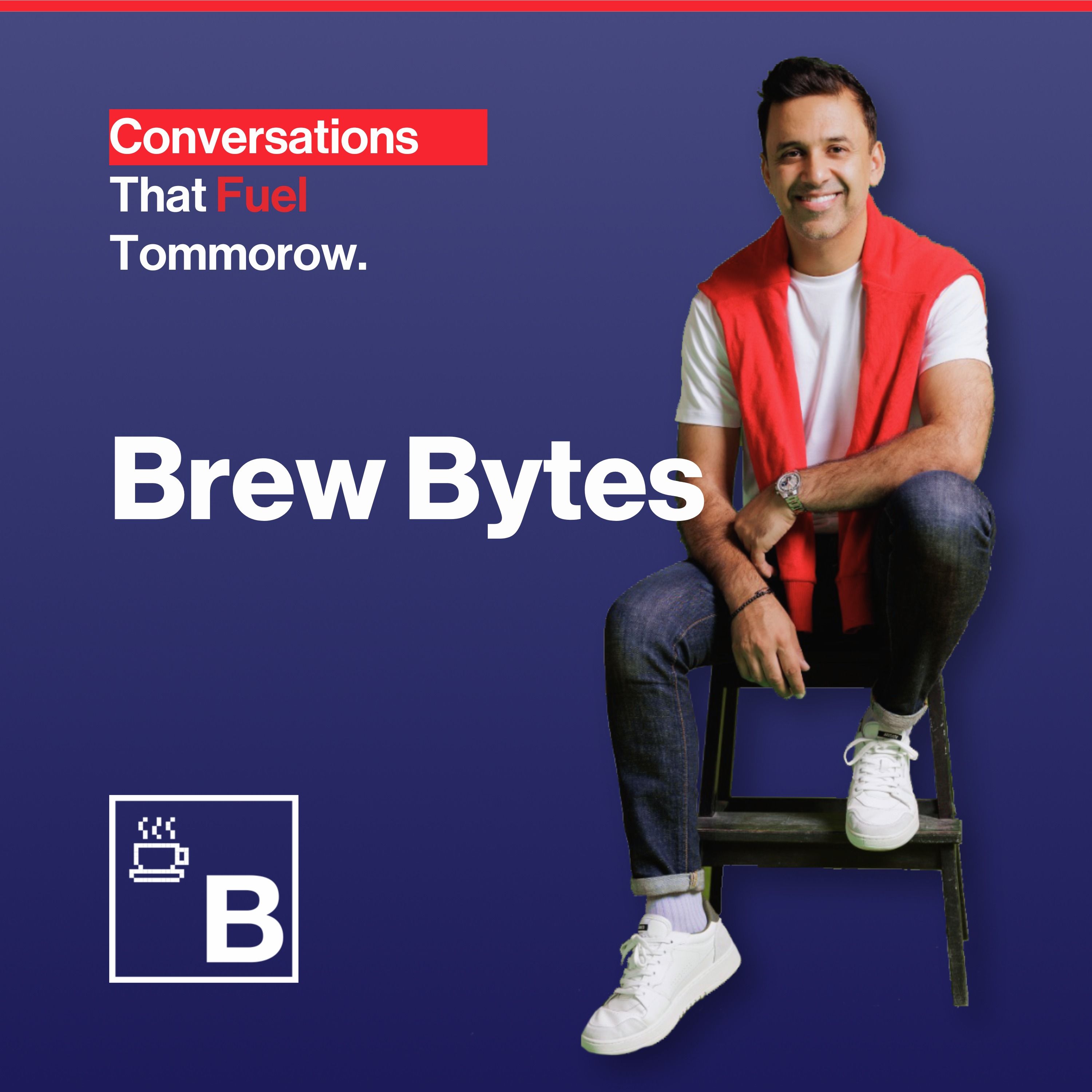
Brew Bytes
Nadeem Ibrahim
